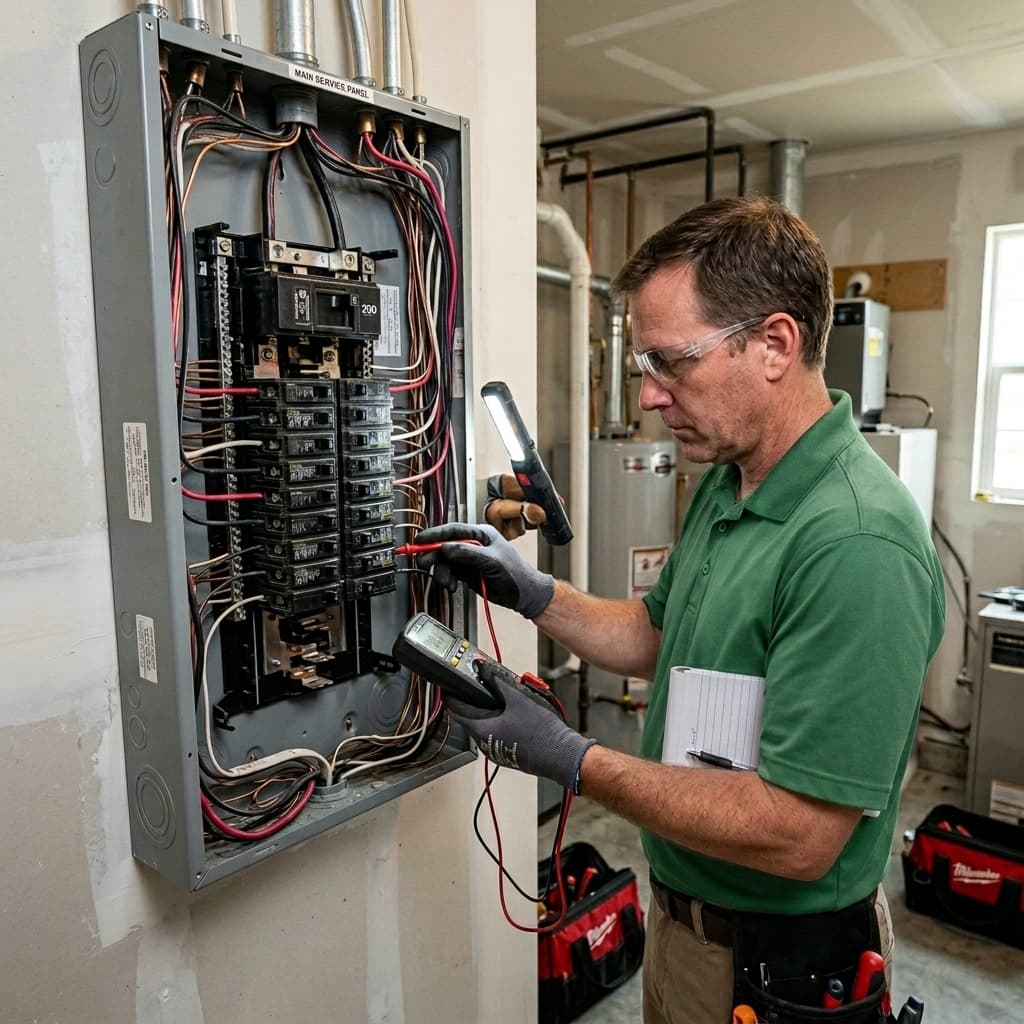
Electrical Problem? Get Local Help Today
Fast local electrical response in Cape Coral, FL
Let's quickly diagnose the problem.
📞 CALL NOW – (833) 993-0933Get help in minutes • Speak directly with a local technician • Same-day service available
When to call now
- •Breaker keeps tripping or will not reset
- •Outlet, switch, or panel feels warm
- •Burning smell, buzzing, sparks, or flickering lights
- •Power is out in part of the home and the cause is unclear
2. Alert / Quick Triage
Quick Triage Checks
- Is the power completely off?
- Are lights flickering or dimming?
- Do breakers trip when using appliances?
- Are there any unusual noises from the panel?
3. Diagnostic Flow (Visual Flowchart)
*Interactive Chart- Storm activity increases electrical fault risk
- High humidity can accelerate corrosion in wiring and components
- Extended use of high-load appliances stresses older electrical systems
4. Diagnostic Conclusion
Most Likely Issue
Based on lights flickering Symptoms
🔥 Likely Cause: Breaker Overload
What you might be noticing:
- Breaker trips repeatedly when high-load appliances (AC, microwave, dryer) are used together
- Power loss occurs in specific areas during peak usage times rather than randomly
Why this is happening:
- Excessive current draw exceeds circuit capacity, triggering breaker protection to prevent overheating
- More common in older electrical systems or when modern appliances exceed original load design
What happens next if ignored:
- Repeated overload cycles weaken breaker reliability and wiring integrity
- What starts as nuisance tripping can escalate into overheating wires and fire risk
This issue is actively developing and will worsen under continued operation.
If you're noticing:
- Is the power completely off?
- Are lights flickering or dimming?
- Do breakers trip when using appliances?
- Are there any unusual noises from the panel?
This issue is actively developing
Local technician help in Cape Coral, FL • Same-day service available
5. Top Causes (Technical Details)
Breaker Overload
- Excessive current draw exceeds circuit capacity, triggering breaker protection to prevent overheating
- More common in older electrical systems or when modern appliances exceed original load design
- Breaker trips repeatedly when high-load appliances (AC, microwave, dryer) are used together
- Power loss occurs in specific areas during peak usage times rather than randomly
- Repeated overload cycles weaken breaker reliability and wiring integrity
- What starts as nuisance tripping can escalate into overheating wires and fire risk
Wiring Fault
- Damaged, loose, or degraded wiring disrupts stable current flow and creates resistance heat
- Insulation breakdown, corrosion, or physical damage exposes conductors and increases failure risk
- Buzzing sounds, burning odors, or visible sparking near outlets or panels
- Lights flicker or power cuts in and out without a consistent trigger
- Heat buildup from resistance can ignite surrounding materials, leading to electrical fires
- Exposure to live wiring significantly increases electrocution risk
Component Failure
- Internal failure of switches, outlets, or connections interrupts proper current distribution
- Wear over time or poor installation can lead to loose contacts and inconsistent performance
- Specific outlets, switches, or fixtures stop working while others remain functional
- Devices lose power intermittently or fail to operate consistently
- Failing components can create localized overheating and damage connected devices
- Left unresolved, the issue can spread to adjacent wiring or circuits
Environmental or Surge Damage
- Voltage spikes from lightning or grid instability overwhelm circuit protection systems
- Moisture intrusion or humidity exposure can degrade outdoor electrical components
- Electrical issues begin immediately after storms, lightning, or power outages
- Breakers trip or devices malfunction without a clear internal cause
- Repeated surge exposure degrades wiring and sensitive components over time
- Increases likelihood of major system failure or hidden electrical faults developing
Local technician help in Cape Coral, FL • Same-day service available
6. When to Stop DIY
- Live voltage exposure can lead to severe electrocution
- Attempting to fix wiring can cause arc flash, leading to severe burns or fire
- Unqualified handling of electrical panels can result in fatal accidents
- DIY repairs might violate local electrical codes, risking fines and mandatory rewiring
- Incorrectly rated breakers or fuses can fail, causing fire hazards
- Tampering with GFI can impair its function, increasing risk of shock in wet areas
This is where DIY stops. The risk is not just damage—it’s safety and system failure.
7. Repair vs. Replace
- Panel age and condition may dictate complete replacement for safety
- Repeated breaker trips indicate a deeper, possibly hazardous issue
- Wiring degradation can pose increasing risks and might require a system overhaul
- Upgrading electrical components can significantly enhance safety and efficiency
- What starts as a minor issue can become a multi-thousand-dollar failure
Local technician help in Cape Coral, FL • Same-day service available
9. Local CTA Strip
Don’t let a small issue turn into a costly mistake.
Local vetted pros. Fast response. Honest answers. Get a custom quote or schedule a repair before small issues turn into expensive disasters.
10. Related Topics / Internal Links
Explore the same problem in nearby cities, related diagnostics, and the full trade hub.
Same Issue In Nearby Cities
Related Symptoms
Trade Hub
Electrical Issue Still Happening?
Do not wait for a small problem to become a bigger safety or repair issue. Call now to speak with a local technician in Cape Coral, FL and schedule same-day service when available.
📞 Call Now – (833) 993-0933